k

About us
Contact us
At the onset of the great war of Mahābhārata, Arjuna demonstrated a beautiful example of humility and reverence. Before engaging in battle, he shot arrows—not to harm—but near the chariots of Grandfather Bhīṣma, Guru Droṇāchārya, and Kṛipāchārya. Witnessing this, Bhīṣma and Droṇa understood Arjuna’s intent. They remarked that before beginning any significant undertaking, it is essential to seek the blessings of elders. Through this symbolic gesture, Arjuna had bowed at their feet in his own unique warrior’s way. Touched by his respectful conduct, they blessed him wholeheartedly, saying, “Vijayi bhava!”—“Be victorious!” Such is the power of offering sincere respect.
In stark contrast stood Duryodhana. As the battle lines were drawn, he approached Droṇāchārya not with humility, but with sarcasm and scorn:
“Behold the mighty army of the Pāṇḍavas, expertly arranged for war by none other than your brilliant disciple—the son of Drupada!”
In his revered commentary, Śrīla Viśvanātha Cakravartī Ṭhākura notes that Duryodhana’s words were not praise, but cutting sarcasm. He implied, “I have never seen a greater fool than you. You taught the very person—Drishtadyumna—who was born to kill you! And now we are in this mess because of your blind affection and poor judgment.”
Thus, on one side stood Arjuna and Yudhiṣṭhira—who honored and bowed before their elders. On the other stood Duryodhana—who mocked and belittled them.
The result was clear:
Those who offered respect attained victory, while those who spoke arrogantly lost everything—their kingdom, their kin, and their own lives.
This lesson is deeply embedded in the opening verses of the Bhagavad-gītā. From the very start, the text warns us:
Never speak to elders with mockery or pride. Always speak with humility and respect.
Only then can we attract the grace that leads to true success in both worldly and spiritual life.
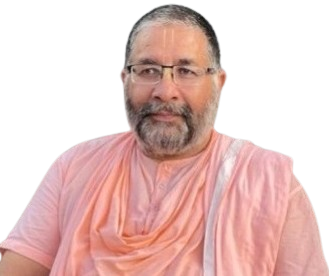
—Srimad Bhakti Vichar Vishnu Maharaj
May 17, 2024
President of Sree Chaitanya Gaudiya Math